Sophie Mol’s visit to Ayemenem
The God of Small ThingsSophie Mol’s visit to Ayemenem brings Chacko’s English daughter and former wife into the household for Christmas, setting in motion events whose consequences reach across the family’s lives. The novel calls the visit a practical point of beginning, while also warning that this is only one way to understand how the tragedy began.
The invitation and journey
Earlier that year, Margaret Kochamma’s second husband, Joe, had died in a car accident. On hearing the news, Chacko invited Margaret Kochamma and Sophie Mol to Ayemenem, unwilling to think of them spending Christmas alone in England, in a house filled with memories. Their journey from London therefore begins in bereavement and is framed by Chacko’s wish to offer them a place with his family.
The planned welcome is part of a family trip to Cochin. Rahel and Estha travel with Mammachi in the Plymouth to see The Sound of Music for the third time; afterward, the family is to stay at Hotel Sea Queen before going to Cochin Airport early the next morning to meet Margaret Kochamma and Sophie Mol. The itinerary gives the visit an ordinary, carefully arranged prelude, even as the story retrospectively makes it the threshold of a decisive rupture.
Family ties and differing views
Sophie Mol is Chacko’s daughter and Rahel and Estha’s cousin. Margaret Kochamma is their English aunt, though she is Chacko’s ex-wife. Her arrival thus reconnects a branch of the family shaped by marriage, divorce, and distance, and makes the Christmas gathering an encounter between relatives who have not been sharing the same home or country.
The family does not agree about what remains between Chacko and Margaret Kochamma. Ammu says Chacko has never stopped loving her; Mammachi rejects that interpretation and prefers to believe that he never loved her at all. These contrasting judgments establish that the visit carries emotional meanings beyond the stated invitation, without resolving which account is true.
A beginning reconsidered
The narration describes Sophie Mol’s arrival as a practical answer to where the sequence of events might have begun, then qualifies that answer: it is only one way of looking at it. The distinction matters. The visit is a point from which the family’s catastrophe can be traced, but not a simple, self-contained cause that explains everything that follows.
The novel connects the few dozen hours surrounding the visit with changes that affect whole lifetimes. It presents ordinary events as fragments later recovered and examined, acquiring new significance in retrospect. In this structure, Sophie Mol’s arrival becomes a narrative hinge: the family’s arrangements for a Christmas welcome stand beside the knowledge that the visit will end in her death.
Death and the visit’s aftermath
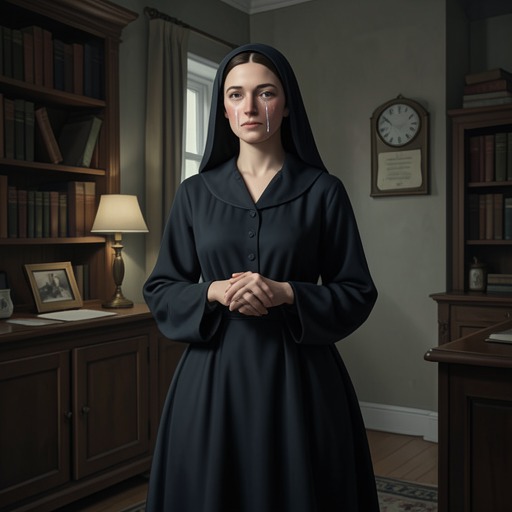
Sophie Mol is almost nine when she dies; Rahel and Estha are seven. Her funeral takes place in Ayemenem, in the old church with new paint. A child-sized coffin, lined with satin and fitted with a shining brass handle, marks the loss in concrete terms. The children had believed that the Government paid for funerals when someone was killed on a zebra crossing, but Sophie Mol was not killed on one, and the Government did not pay for hers.
That contrast between a child’s mistaken idea of a free funeral and the actual funeral does not soften the loss; it underscores the gap between what the children imagined and what happened. The visit that began as a Christmas invitation after Joe’s death is recalled through another death, and the welcome planned for Sophie Mol becomes inseparable from the family’s lasting bereavement.